I am not a fan of twitching these days, which means it’s not often I am faced with the question of whether to ‘go for’ a bird. That said, there are certain situations I will. Today was one of those days. The main reason was to catch-up with a birding mate, Rik. I hadn’t seen him face to face for 2+ years because of the pandemic, and because I am based in Kent (used to be Surrey) and Rik is based in Hampshire (used to be Berkshire).
Birding is good for mental and emotional well-being for many reasons, one being it provides an opportunity to see and connect with friends who share the same hobby. Yet, I find it astonishing – even after 30+ years of birding – the same hobby (let’s call it bird watching for now) – has a multiverse of sub-disciplines: birding, twitching, bird finding, vis-migging, noc-migging, ring reading, ringing, patching, nest finding and sea-watching to name a few. There are obviously overlaps in these, and today twitching a Hume’s leaf warbler at Bockhill, Kent will hopefully help me find one.
How?… Because I had not seen or heard one for before. Having experience of a species in the field can only increase the chances of finding one in my view. Call is particularly important to separate this species from yellow-browed warbler. Whilst the books (Collins, for example) describe the call of Hume’s as being shorter, softer and a lower-pitched ‘dsu-weet‘ compared to the yellow-brows loud, higher pitched ‘sweest‘ or ‘tsoeest‘ – to me I will remember the call of a Hume’s warbler as a yellow-brow with a frog in its throat. I doubt if that description is in any book, but that memory will help me to retain the call for future recall. It is another ‘good’ reason why I will, occasionally, twitch. That is to gain field experience of a species so that I might one day have the skills and experience to pick one up.
Other species seen during the morning and early afternoon were a long-staying white stork at Worth, and a black brant at Reculver, which sits within my ’10km patch.’ On the way back to the towers, two red-breasted mergansers flew past.
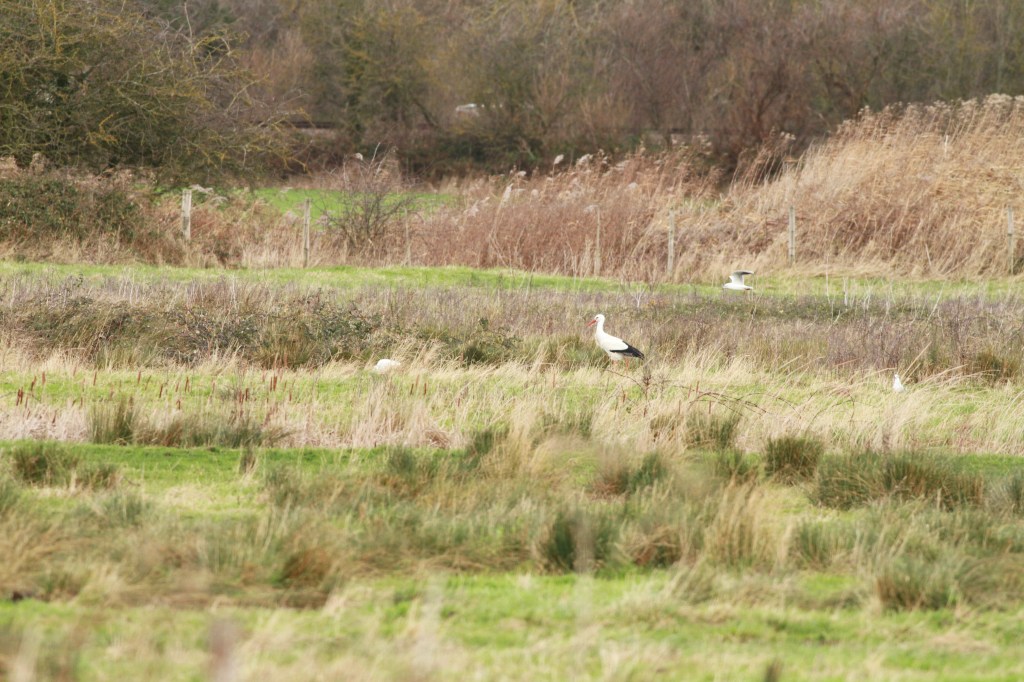
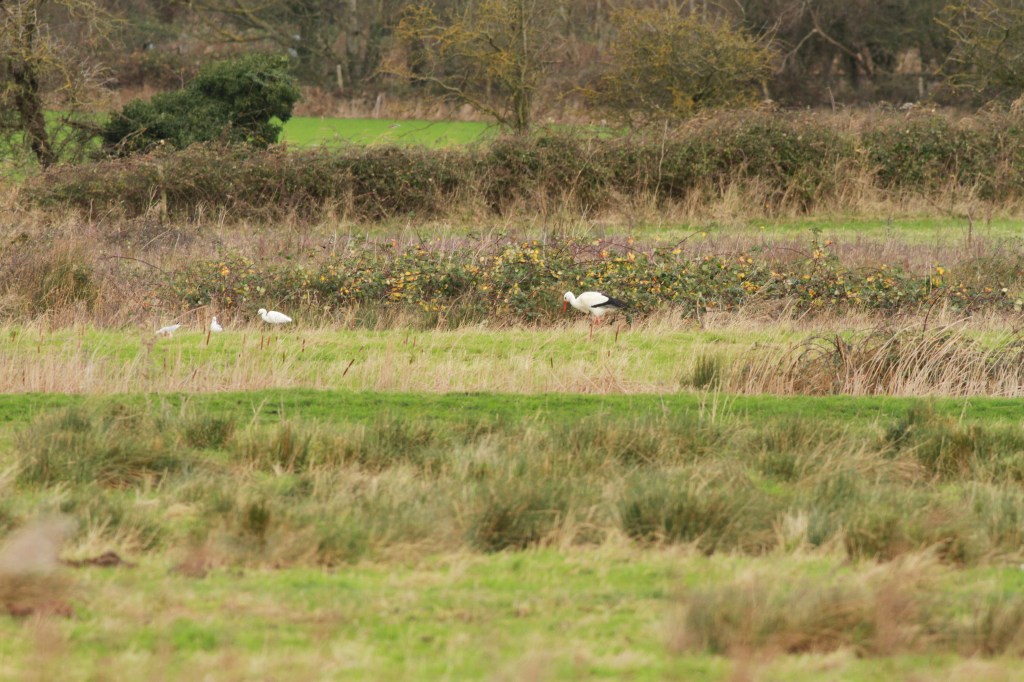
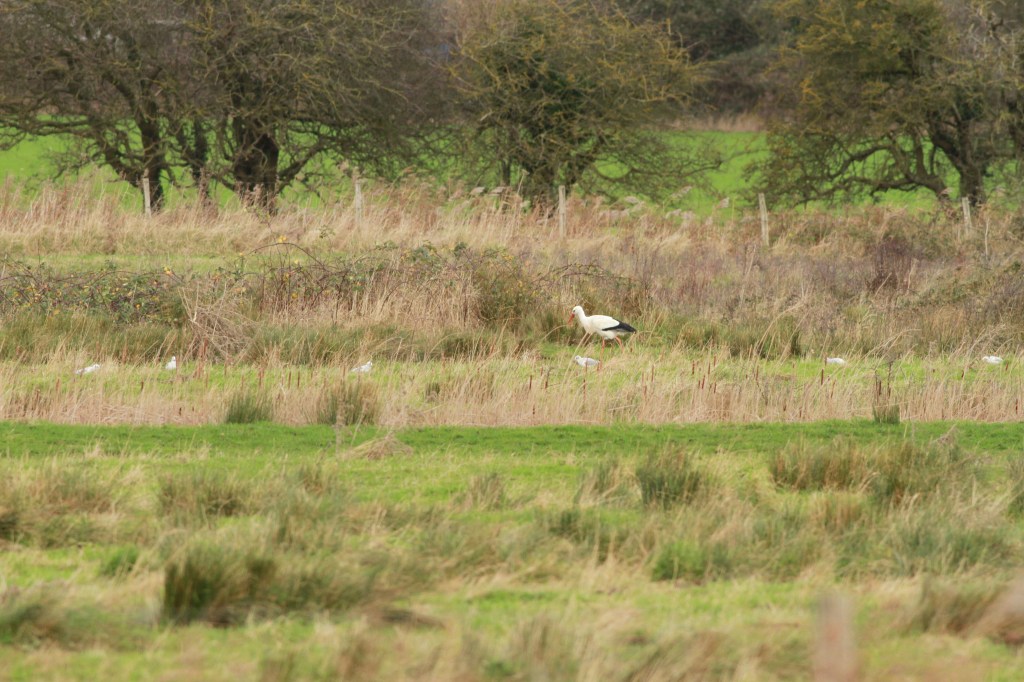
A long-staying white stork at Worth. It’s un-ringed, but how do you judge the origins of such birds?!
 Dr Dave's Birding Blog