I couldn’t keep up the blogging in the last half of 2022, so in early 2023 I am writing a series of monthly summaries. I hope to do more regular updates in 2023.
This approach does allow me to be more reflective, and little did I know in August that the first half of 2022 was going to be better than the latter half, despite a lot of birding effort in August, September, and October.
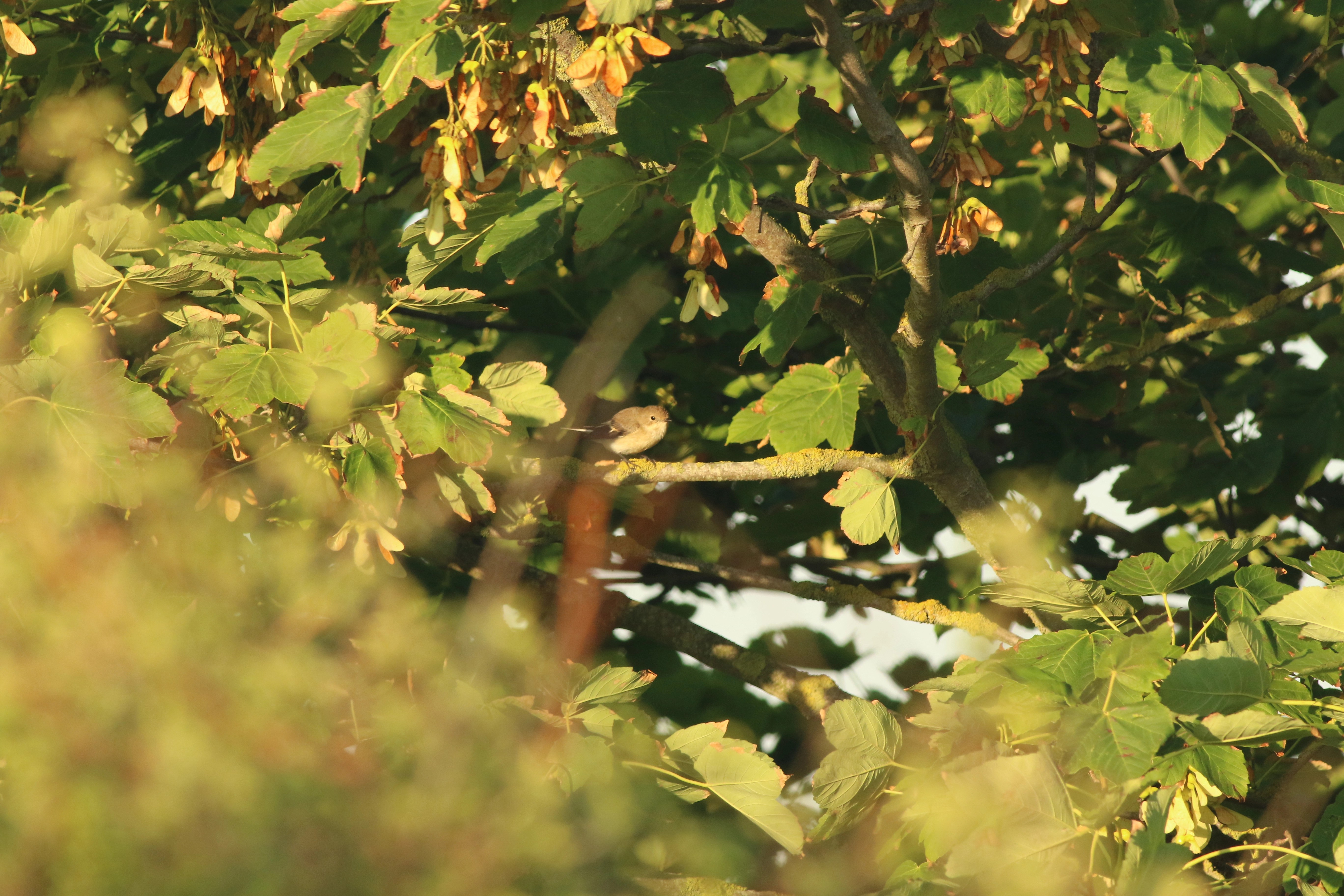
In August I managed to submit 27 eBird checklists, excluding those associated with my garden, and the month was characterised by the start of autumn migration. In the bushes and scrub, willow warbler numbers seemed to peak towards the end of the month after I saw the 1st bird at the very start of August. However, others had peak counts in the 1st week of August. Four redstarts were a nice surprise on the 11th, and I was lucky enough to see several pied flycatcher and whinchat in and around Reculver/Minnis Bay. By the month’s end, warbler numbers had noticeably dropped, and the species composition started to change.
Away from the bushes, I found a 1st cycle yellow-legged gull on the beach and several wader species passed through, including a wood sandpiper on the 13th. Numerous early mornings allowed me to catch-up with barn owl on several occasions, which is always a nice way to start the day. Two scaup flew close past me on the 22nd, which was a complete surprise. Towards the month end some sea watching meant I caught up with four arctic skua (including one over my head) and a nice movement of terns, including 55 resting on the mud on the 31st.
Five trips to Oare on the way to and from work (to minimise additional driving miles) allowed me to catch up with the returning Bonaparte’s gull, various waders, and black tern. An additional trip on a weekend afternoon with a non-birding friend allowed me to show him seven grass snakes hunting marsh frogs. He loved it!
The last experience left me reflecting how powerful personal experiences of nature can be, especially for those who don’t normally have the privilege of such encounters. Perhaps the more we share our love of nature with friends, work colleagues and others, the more we can help protect it.
Early morning starts at Grove Ferry during the month to search for waders, crakes, and other scare wetland birds didn’t turn up a self-found bird, but I did enjoy watching the long-staying juvenile purple heron, two spotted redshank, bittern, young marsh harriers and baby water rail.
A Kent-based trip outside of the 10km patch radius during August allowed good views of a honey buzzard as it soared over me.
At the other end of the birding spectrum, my Kent Cricket ground bird list increased – not that I tend to keep lists. However, the Kent Cricket Ground list does add additional interest during the quieter spells of play. At this point, some context is probably needed, this being that my wife loves watching cricket and I join her on occasions. On one of the several occasions when I wasn’t at cricket, but my wife was, she educated some of the England coaching staff that seagulls don’t exist! I guess this must be one of the unexpected nuggets of information my wife has picked up as a result of being married to a birder and self-confessed eco-geek.
At the end of August, I had seen 168 bird species within the 10km patch.

 Dr Dave's Birding Blog